The Dawn Of Everything: A New History Of Humanity, authored by David Graeber and David Wengrow, promises to revolutionize how you perceive human history. This captivating work challenges deeply embedded assumptions about social evolution, pushing the boundaries of how you understand the development of agriculture, cities, states, and democracy. It invites you to reconsider narratives that have long framed our ancestors as primitive or innocent, instead revealing the intricate tapestry of human existence.
Delving into a wealth of groundbreaking archaeological and anthropological research, the authors confront the notion that civilization only emerged through significant sacrifices of freedom or stringent control of instincts. Instead, they present an alternate view suggesting that human history is vibrant, full of unexpected turns and exciting possibilities. By unveiling new interpretations of social and economic organization, the book encourages you to rethink the established course of humanity. As you explore this monumental work, you’ll not only engage with its profound intellectual depth but also discover pathways to envision new forms of freedom and societal structures. Get ready to embark on a transformative journey through history and imagination.
The Dawn Of Everything: A New History Of Humanity challenges the conventional narratives of our past, presenting a radically new understanding of human history that reshapes what you know about social evolution. Written by David Graeber and David Wengrow, this book defies simplistic notions of our ancestors as either noble savages or brutish creatures. Instead, it reveals the complex and varied societies that existed long before the dawn of agriculture and the rise of cities.
By engaging with groundbreaking research in archaeology and anthropology, the authors illuminate how your understanding of historical trajectories—such as the emergence of democracy, inequality, and civilization itself—could shift dramatically. The Dawn Of Everything invites you to reconsider how early humans organized their lives, suggesting that you have much to learn from those who lived in a past rich with possibilities.
This monumental work not only transforms your comprehension of humanity’s journey but also inspires you to envision new forms of freedom and innovative ways to structure society. As you delve into its pages, you may find yourself rethinking the foundations of modern existence.
Download The Dawn Of Everything: A New History Of Humanity PDF
Download book The Dawn Of Everything: A New History Of Humanity PDF or read ebook, epub, listen to audio books online for free book The Dawn Of Everything: A New History Of Humanity PDF by author David Graeber, David Wengrow published by publisher Farrar, Straus and Giroux.
| Tác giả: | David Graeber, David Wengrow. |
| Nhà xuất bản: | Farrar, Straus and Giroux. |
| Năm xuất bản: | 2021. |
| Ngôn ngữ: | Tiếng Anh. |
| Trọng lượng: | 930gr. |
| Kích thước: | 23.6 x 19.6 x 5.7 cm. |
| Số trang: | 704 trang. |
| Hình thức: | Bìa Cứng. |

Read The Dawn Of Everything: A New History Of Humanity Ebook Online
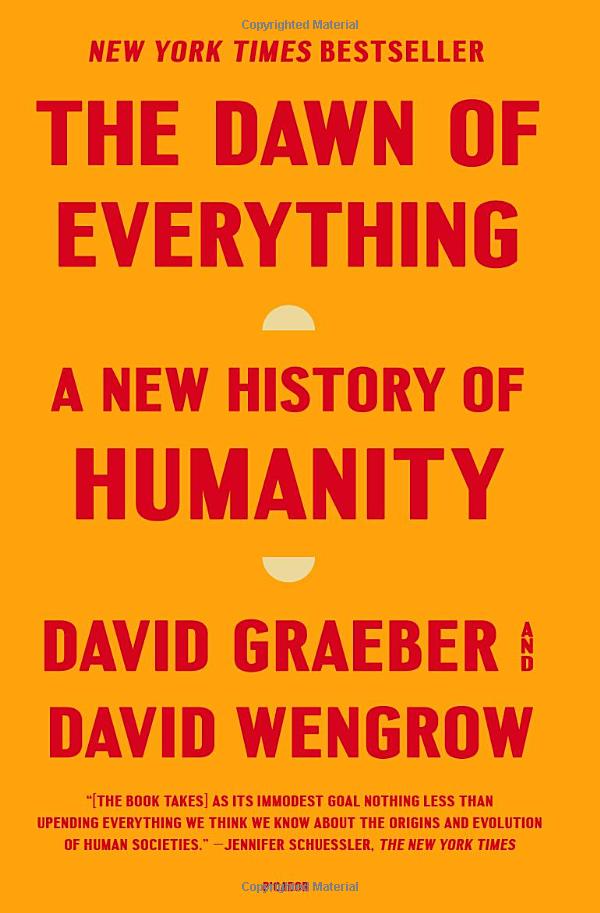
The Dawn Of Everything: A New History Of Humanity
INSTANT NEW YORK TIMES BESTSELLER
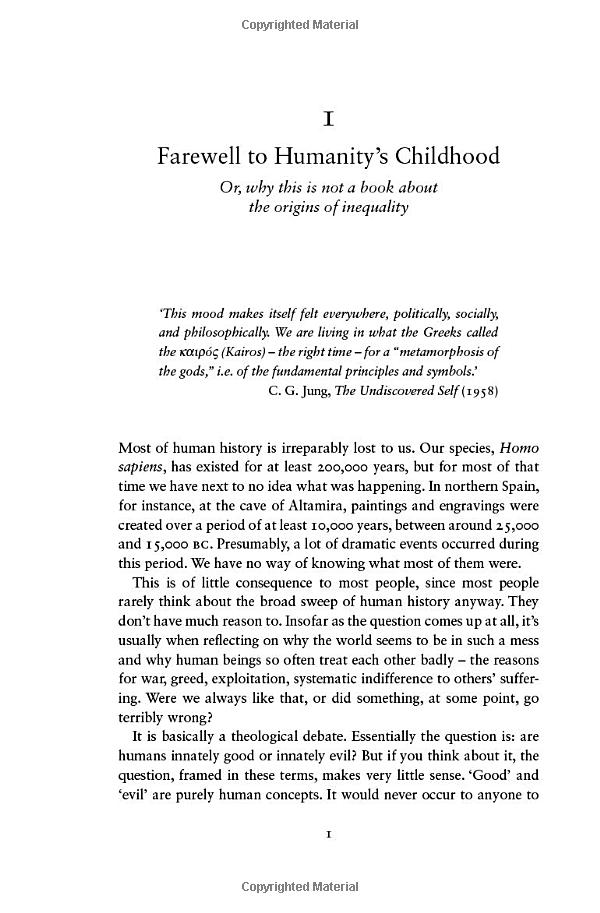
A dramatically new understanding of human history, challenging our most fundamental assumptions about social evolution―from the development of agriculture and cities to the origins of the state, democracy, and inequality―and revealing new possibilities for human emancipation.
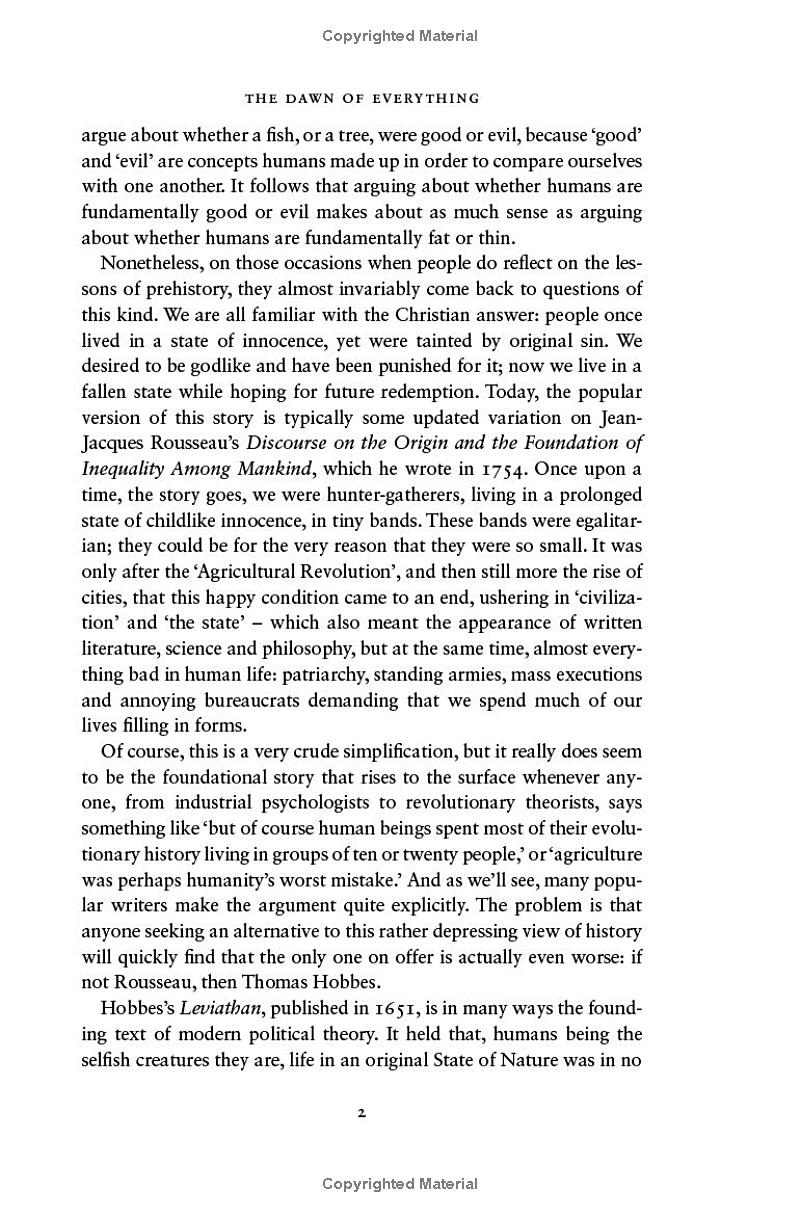
For generations, our remote ancestors have been cast as primitive and childlike―either free and equal innocents, or thuggish and warlike. Civilization, we are told, could be achieved only by sacrificing those original freedoms or, alternatively, by taming our baser instincts. David Graeber and David Wengrow show how such theories first emerged in the eighteenth century as a conservative reaction to powerful critiques of European society posed by Indigenous observers and intellectuals. Revisiting this encounter has startling implications for how we make sense of human history today, including the origins of farming, property, cities, democracy, slavery, and civilization itself.
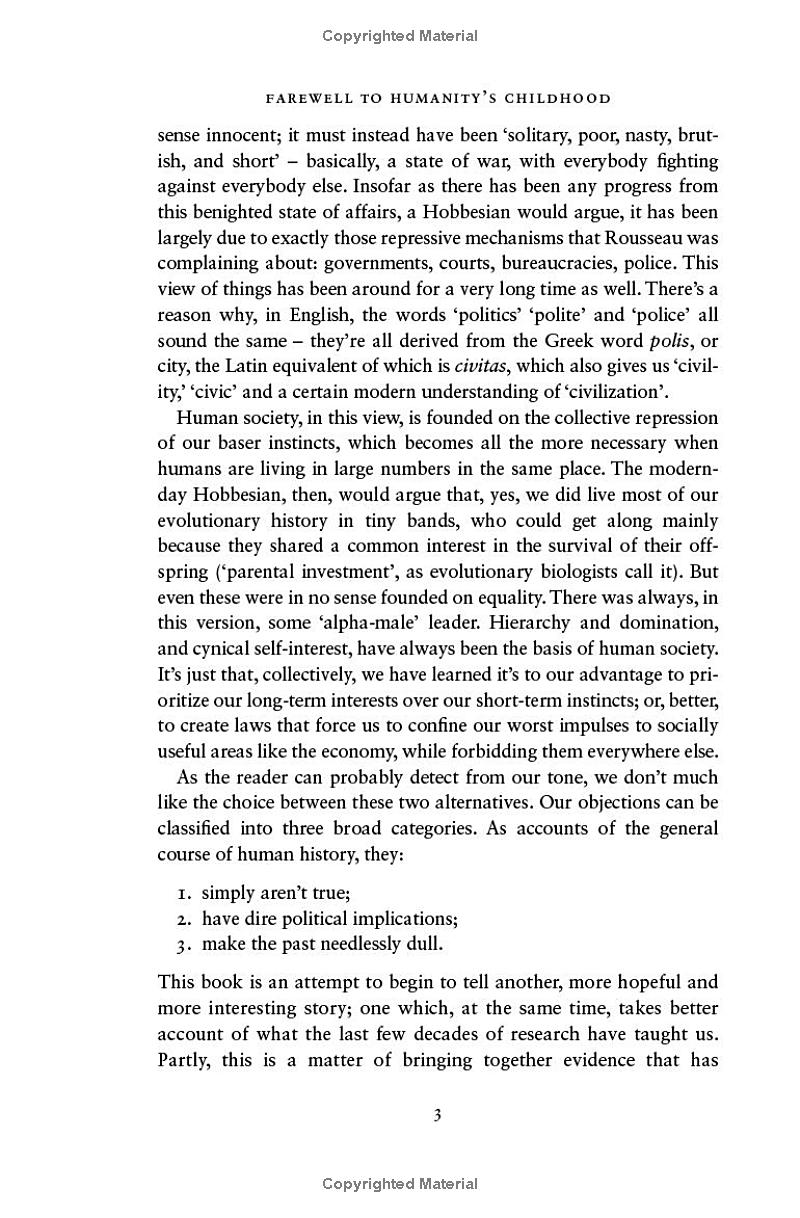
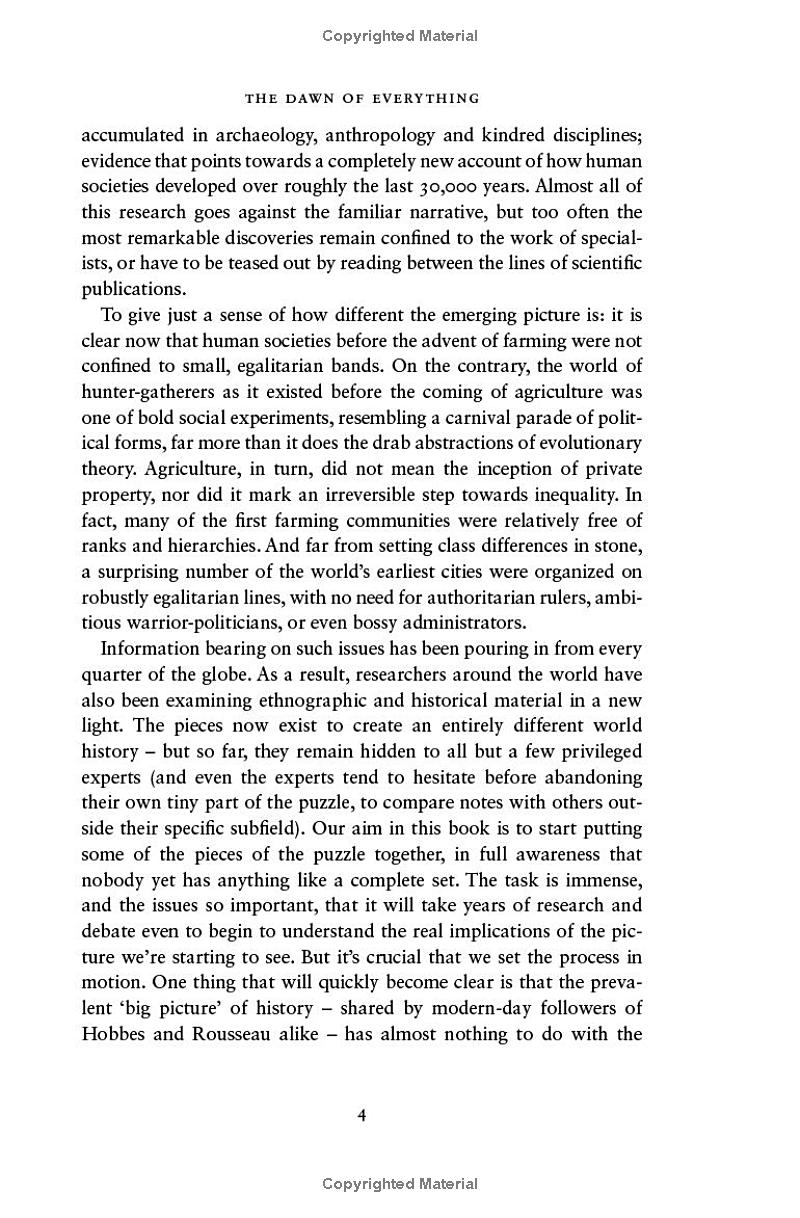
Drawing on pathbreaking research in archaeology and anthropology, the authors show how history becomes a far more interesting place once we learn to throw off our conceptual shackles and perceive what’s really there. If humans did not spend 95 percent of their evolutionary past in tiny bands of hunter-gatherers, what were they doing all that time? If agriculture, and cities, did not mean a plunge into hierarchy and domination, then what kinds of social and economic organization did they lead to? The answers are often unexpected, and suggest that the course of human history may be less set in stone, and more full of playful, hopeful possibilities, than we tend to assume.
The Dawn of Everything fundamentally transforms our understanding of the human past and offers a path toward imagining new forms of freedom, new ways of organizing society. This is a monumental book of formidable intellectual range, animated by curiosity, moral vision, and a faith in the power of direct action.
Includes Black-and-White Illustrations
Review The Dawn Of Everything: A New History Of Humanity
“The Dawn Of Everything: A New History Of Humanity” by David Graeber and David Wengrow offers an illuminating perspective that challenges your preconceptions about human history. You will find that the authors compellingly argue against the traditional narratives that restrict our understanding of social evolution. Imagine a world where agriculture and cities do not necessarily equate to hierarchy and domination. This book invites you to explore unexpected avenues of human organization and relationships, revealing that our past was not merely a linear progression towards modernity but a complex tapestry of social possibilities. Engaging with this text means confronting profound questions about our origins in hunter-gatherer societies and the nature of early civilizations. Are we ready to reconsider the roles of democracy, property, and inequality in shaping our human story? The insights shared provide fertile ground for reimagining what a liberated future might look like. Not only does this exploration harken back to historical critiques from Indigenous thinkers, but it also pushes the boundaries of how we relate to our past and each other. By the end of your journey through these pages, you may find a renewed sense of hope about humanity’s potential, empowered by the belief that freedom and creative social organization can coexist. This monumental work is not just a history lesson but a call to action to rethink our place within the continuum of human existence. As a reader, you’ll walk away not just informed, but inspired to pursue new forms of freedom and understanding.
“The Dawn Of Everything: A New History Of Humanity” by David Graeber and David Wengrow is a transformative work that challenges your understanding of human history. You might find it intriguing how the authors dissect the traditional narratives surrounding the development of agriculture, cities, and the origins of inequality. Instead of viewing our ancestors as primitive, you are invited to see a complexity that unfolds through a new lens—one that encourages curiosity and re-evaluation of preconceived notions. This book reframes the story of humanity, suggesting that freedom and social organization can coexist in various forms, presenting a refreshing take on the past that resonates with contemporary social questions.
As you dive into this masterful narrative, the authors utilize groundbreaking research in archaeology and anthropology to reveal unexpected answers about human societies. Their arguments prompt you to reconsider not just the historical trajectories of farming and the rise of states, but also the very essence of democracy and social constructs. You may feel empowered by the possibilities they articulate, laying the groundwork for imagining innovative societal structures.
Furthermore, the book maintains an engaging and thought-provoking style, urging you to contemplate new forms of freedom and direct action. In essence, it may serve as a catalyst for change in your views about human potential and organizational frameworks, making it a must-read for anyone fascinated by history and its implications for the future. The bold ideas presented here unlock a pathway to a more hopeful understanding of our collective humanity.
Lessons from The Dawn Of Everything: A New History Of Humanity
The Dawn Of Everything: A New History Of Humanity presents a radical shift in how you might perceive human history, emphasizing a dynamic understanding of civilization that invites reflection on your own beliefs. You may feel challenged by the idea that our ancestors were neither merely primitive nor inherently violent, but rather complex beings operating within diverse social frameworks. This perspective encourages you to reconsider the narratives you accept about the origins of agriculture, property, and governance. Perhaps this book offers life lessons that resonate deeply: it urges you to embrace complexity in both history and contemporary society. It advocates that freedom and equality are not only possible but attainable, and it emphasizes that the past is neither a predetermined narrative nor an eternal cycle of domination and hierarchy.
As you navigate your world, you may find value in the idea that tradition can be reexamined and innovated, shaping your aspirations for a more equitable future. Like the authors’ assertion that humans thrived in varied social structures, you might see opportunities to cultivate community and solidarity in your own life. The book mends connections between past and present, prompting you to believe in the potential for social change rooted in understanding and empathy.
Furthermore, by embracing this new lens, you start to realize that history is not fixed—it is as fluid as human cooperation and creativity allow. In drawing upon archaeological and anthropological insights, Graeber and Wengrow inspire you to ask not just “What has been done?” but “What could be?” This encourages an exploration of endless possibilities in your pathways forward, enabling you to mold your human experience in pursuit of justice and freedom. Ultimately, you may find that challenging assumptions enriches your understanding of humanity, offering a guide for collective emancipation and enhanced social organization. Uncovering these insights may empower you to act decisively in your own life and community, pursuing a future as vibrant and varied as the history we share.
Reading The Dawn Of Everything: A New History Of Humanity by David Graeber and David Wengrow can change the way you perceive human history. You might find it enlightening to understand how our ancestors have been misconstrued as either primitive beings or ideal citizens. This book invites you to challenge those long-held beliefs and encourages you to explore the idea that social evolution is more fluid than we often think. By examining the origins of farming, property, and democracy, the authors reveal that human history is not a linear path but rather a tapestry woven from diverse experiences.
Like many readers, you may question the established narratives of hierarchy and domination that accompany the rise of agriculture and cities. Instead, Graeber and Wengrow present a revolutionary perspective: the evolution of societies could lead to new forms of freedom and organization. You might find inspiration in their assertion that history is “less set in stone” and holds potential for creativity and innovation. It serves as a reminder that your understanding of freedom and social structures can benefit from curiosity and a willingness to reassess previously accepted notions.
Not only does the book challenge its readers intellectually, but it also inspires action. It highlights how reflecting on history can fuel your aspirations for a better society. You may relate to the moral vision illuminated in the pages and feel empowered to contribute to direct action in your own communities. This transformative understanding prompts questions you may not have considered before: How can you involve yourself in crafting a society that uplifts rather than confines? What possibilities await when barriers of thought are dismantled?
Ultimately, The Dawn Of Everything awakens a sense of hope and responsibility within you. It shows there is profound potential in examining humanity from new angles. Engaging with its ideas may encourage you to become an active participant in shaping a more equitable future.