Child Centred Planning In The Early Years Foundation Stage provides a critical resource for those involved in early childhood education. Planning for learning in the EYFS can often feel overwhelming and intricate. You might experience challenges in creating effective plans that genuinely serve the developmental needs of children. This book aims to alleviate those concerns by guiding you on how to focus on individual learning rather than merely activities and topics. By utilizing the insights within, you can enhance your confidence and effectiveness in planning.
In this transformative guide, you will explore the wider context of children’s learning while making professional, informed decisions to support their unique journeys. You’ll find practical advice on how to be responsive to children’s individual needs and capitalize on spontaneous learning opportunities. Furthermore, the book emphasizes the importance of being an advocate for child-centred planning.
With the inclusion of the Development Matters non-statutory guidance, this book serves as a complete resource, enabling you to confidently navigate the complexities of early years education.
Child Centred Planning In The Early Years Foundation Stage is an essential resource designed for educators committed to enhancing learning experiences in the EYFS. You may find planning for children’s learning to be a complex and often overwhelming task. However, this book empowers you to move beyond the struggle of planning activities and instead focus on meaningful learning outcomes.
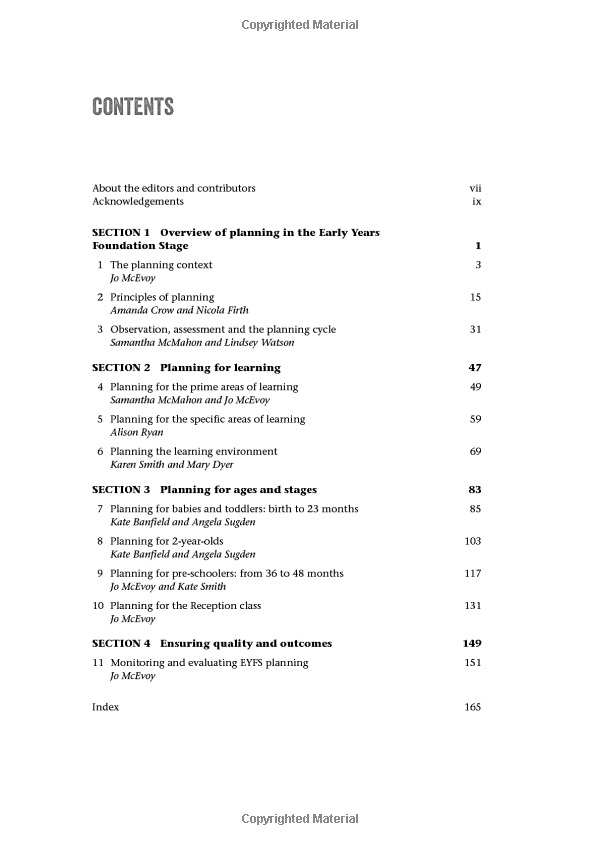
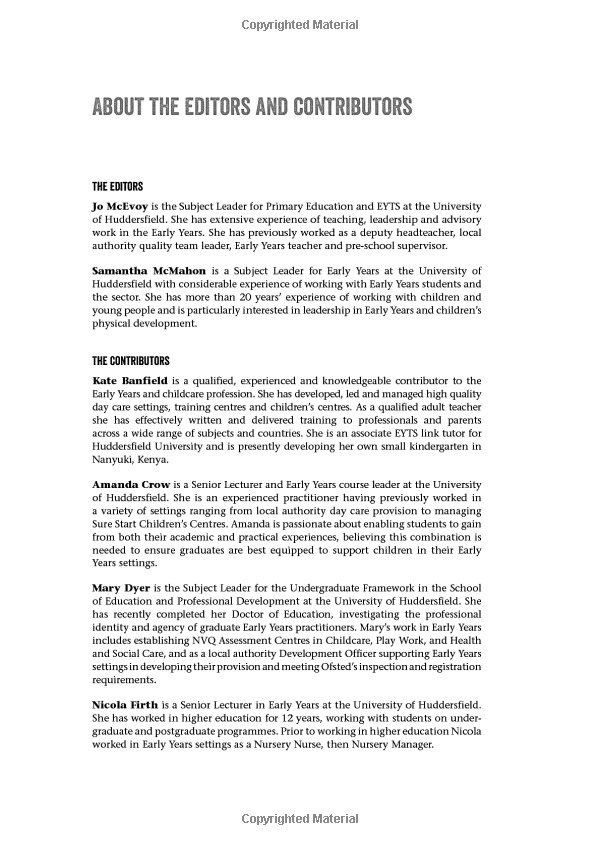
By delving into key aspects of child-centred planning, you will explore the broader context of children’s learning and make professional, informed decisions that truly support individual needs. The authors, Jo McEvoy and Samantha McMahon, provide insight into how to appropriately use both statutory and non-statutory guidance, helping you stay responsive to the dynamic nature of children’s learning.
With this resource, you can transform your approach to planning by seizing learning opportunities as they arise and advocating for a child-centred philosophy. The inclusion of the Development Matters guidance offers a comprehensive framework, ensuring you feel confident and capable in your planning efforts. Embrace this journey and make a lasting impact on your young learners!
Download Child Centred Planning In The Early Years Foundation Stage PDF
Download book Child Centred Planning In The Early Years Foundation Stage PDF or read ebook, epub, listen to audio books online for free book Child Centred Planning In The Early Years Foundation Stage PDF by author Jo McEvoy, Samantha McMahon published by publisher Learning Matters.
| Tác giả: | Jo McEvoy, Samantha McMahon. |
| Nhà xuất bản: | Learning Matters. |
| Năm xuất bản: | 2019. |
| Trọng lượng: | 500gr. |
| Kích thước: | 29.7 x 21 x 1.1 cm. |
| Số trang: | 184 trang. |
| Hình thức: | Bìa Mềm. |





Read Child Centred Planning In The Early Years Foundation Stage Ebook Online
Child Centred Planning In The Early Years Foundation Stage
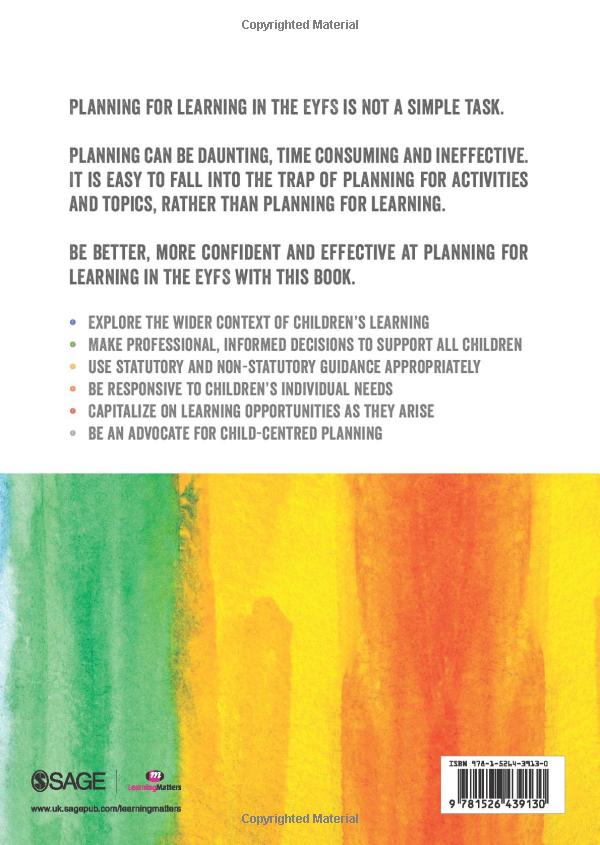
Planning for learning in the EYFS is not a simple task.
Planning can be daunting, time consuming and ineffective. It is easy to fall into the trap of planning for activities and topics, rather than planning for learning.
Be better, more confident and effective at planning for learning in the EYFS with this book.
– Explore the wider context of children’s learning – Make professional, informed decisions to support all children – Use statutory and non-statutory guidance appropriately – Be responsive to children’s individual needs – Capitalize on learning opportunities as they arise – Be an advocate for child-centred planning
The Development Matters in the Early Years Foundation Stage (EYFS) non-statutory guidance is included in full in this book to offer a complete resource for planning.
Review Child Centred Planning In The Early Years Foundation Stage
Child Centred Planning In The Early Years Foundation Stage by Jo McEvoy and Samantha McMahon is an invaluable resource for anyone involved in early childhood education. This book delves into the fundamental aspects of planning for learning within the Early Years Foundation Stage (EYFS), making it essential for educators seeking to enhance their practice. You might find that traditional planning methods often neglect the individual needs of children, leading to a formulaic approach. However, this book inspires you to design learning experiences that are both engaging and responsive to those needs, making it a truly child-centred approach.
The authors guide you through the complexities of integrating both statutory and non-statutory guidance, ensuring that you can make informed decisions that support diverse learning styles. You will appreciate how effectively the book encourages you to seize spontaneous learning opportunities, thus creating a dynamic learning environment. Like a personal coach, the authors advocate for becoming an active champion of child-centred planning, helping you feel confident in your role.
Should you choose to explore this resource, you will find the comprehensive inclusion of the Development Matters guidance invaluable for your planning needs. The approach outlined is not only practical but also transformative, allowing you to shift focus from merely planning activities to genuinely fostering a love for learning among children. Overall, McEvoy and McMahon provide a well-rounded, effective tool for enhancing your planning skills in the EYFS, making your daily practice both enriching and impactful.
“Child Centred Planning In The Early Years Foundation Stage” by Jo McEvoy and Samantha McMahon is an indispensable resource for educators navigating the complexities of planning in the EYFS. You might find that planning can often feel overwhelming, fraught with the danger of focusing on activities rather than genuine learning objectives. This book equips you with the tools to transform your approach, enabling you to create a more engaging and effective learning environment for your children. You will learn how to explore the wider context of children’s learning, making informed decisions to support their individual needs. Unlike other resources, this book emphasizes the importance of being responsive and maximizing learning opportunities as they arise, allowing for a truly dynamic educational experience. With the inclusion of the Development Matters framework, you will find this book a comprehensive guide to applying both statutory and non-statutory guidance effectively. This not only facilitates better planning but also champions a child-centred philosophy that is essential in the early years. The emphasis on being an advocate for child-centred planning will resonate deeply with educators striving to elevate their practice. If you’re seeking to enhance your confidence and effectiveness in planning, this book should be at the top of your reading list. You can now see planning as a meaningful process rather than a mundane task, ensuring your approach aligns with the fundamental principles of the EYFS. In short, McEvoy and McMahon deliver a compelling narrative that supports your journey toward enriching children’s learning through child-centred planning.
Lessons from Child Centred Planning In The Early Years Foundation Stage
In reflecting on my journey with Child Centred Planning In The Early Years Foundation Stage, I realize how crucial it is to shift from activity-focused planning to a genuine understanding of learning. Your approach to planning in the EYFS can determine how effectively children engage and grow. Instead of merely mapping activities, it’s vital to focus on children’s individual needs and the context of their learning. This book empowers you to make informed decisions regarding child development, highlighting the importance of being responsive to each child’s unique journey. It teaches you to capitalize on spontaneous learning opportunities, embracing the moments of discovery that can lead to profound growth and understanding. I learned that advocating for child-centred planning isn’t just an educational strategy; it’s a philosophy that influences every interaction with children. This shift can seem daunting, but it fosters a more effective, supportive learning environment that benefits everyone involved. With guidance from Development Matters, you can effectively integrate valuable insights into your planning. Ultimately, this experience has taught me that successful learning isn’t about rigid structures, but about fostering openness, curiosity, and exploration in early learners. Putting children at the center of planning cultivates a deeper, more meaningful educational experience.
Child Centred Planning In The Early Years Foundation Stage opens a window to critical learning philosophies. You discover that planning for learning isn’t just a mere checklist but a nuanced approach. Like most educators, you’ve felt the pressures of comprehensive planning. It can seem daunting and often feels like you’re merely checking off activities rather than enriching children’s developmental journeys. However, this book emphasizes the importance of focusing on each child’s unique needs and interests. By embracing a child-centred approach, you learn to navigate the complexities of the EYFS with increased confidence and purpose.
Not only does the book highlight the significance of being responsive to children’s individual needs, but it also encourages you to capitalize on spontaneous learning opportunities. By understanding and utilizing both statutory and non-statutory guidance appropriately, you generate richer learning experiences. This serves as a reminder that effective planning should be flexible, adapting to circumstances rather than adhering strictly to pre-set topics or activities.
Moreover, being an advocate for child-centred planning fosters a deeper connection between you and your students. You see that learning is an ongoing, dynamic process. Therefore, planning is less about administrative work and more about creating environments where every child can flourish. You feel empowered to make professional, informed decisions that benefit all students, enabling you to create rich, meaningful experiences that resonate with each child’s individual journey.
In conclusion, reading Child Centred Planning In The Early Years Foundation Stage transforms your perspective on planning. You realize that with a shift in focus—from activities to meaningful learning—you can effectively support the holistic development of children. This journey not only enhances your professional skills but also nurtures your passion for education, reminding you that every child is unique and deserves tailored support. Your journey as an educator is about understanding, adapting, and advocating for the children in your care.