After Steve: How Apple Became A Trillion-dollar Company And Lost Its Soul takes you on a revealing journey inside Apple in the years following the death of its visionary leader, Steve Jobs. Author Tripp Mickle masterfully explores the contrasting trajectories of two key figures: Jony Ive and Tim Cook. You’ll discover how Jobs’ “spiritual partner” trusted his creative vision, shaping iconic products like the iPod and iPhone. Yet, following Jobs’ untimely passing, you may find yourself questioning how one of the most innovative companies succumbed to the pressures of profitability over creativity.
As you delve deeper into the narrative, you’ll see Cook’s rise as the opposite force to Ive’s artistry. Driven by a relentless focus on margins, Cook not only boosted Apple’s valuation to $2 trillion but also altered its very essence. The book features insights from over 200 individuals intimately connected to Apple’s evolution, illustrating how the company abandoned its innovative spirit. With compelling anecdotes and powerful revelations, Mickle unveils a cautionary tale of what happens when a tech giant strays from its roots in pursuit of sheer operational excellence.
After Steve: How Apple Became A Trillion-dollar Company And Lost Its Soul delves into Apple’s journey post-Steve Jobs, offering a compelling narrative crafted by Tripp Mickle. You’ll discover the untold story behind Apple’s evolution, shaped not only by innovation but also by an internal struggle between creativity and profit. You might find yourself questioning how a company that once revolutionized technology has, seemingly, abandoned its roots.
Through insightful interviews with over 200 figures, including key executives and influential personalities, Mickle reveals how the creative genius of Jony Ive was eclipsed by the operational acumen of Tim Cook. While Cook’s leadership has transformed Apple into a trillion-dollar powerhouse, it also marked the beginning of a shift away from the groundbreaking innovation that characterized Jobs’ era. Can you imagine a future where Apple’s designs lack inspiration? This book challenges you to reflect on the cost of success—suggesting that in the pursuit of profits, Apple may have lost its very soul.
Download After Steve: How Apple Became A Trillion-dollar Company And Lost Its Soul PDF
Download book After Steve: How Apple Became A Trillion-dollar Company And Lost Its Soul PDF or read ebook, epub, listen to audio books online for free book After Steve: How Apple Became A Trillion-dollar Company And Lost Its Soul PDF by author Tripp Mickle published by publisher William Morrow.
| Tác giả: | Tripp Mickle. |
| Nhà xuất bản: | William Morrow. |
| Năm xuất bản: | 2022. |
| Ngôn ngữ: | Tiếng Anh. |
| Trọng lượng: | 676gr. |
| Kích thước: | 23.6 x 16.3 x 3.5 cm. |
| Số trang: | 512 trang. |
| Hình thức: | Bìa Cứng. |




Read After Steve: How Apple Became A Trillion-dollar Company And Lost Its Soul Ebook Online
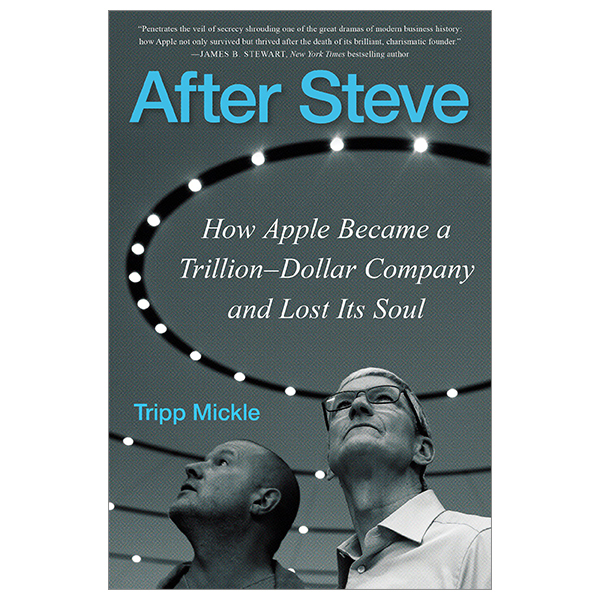
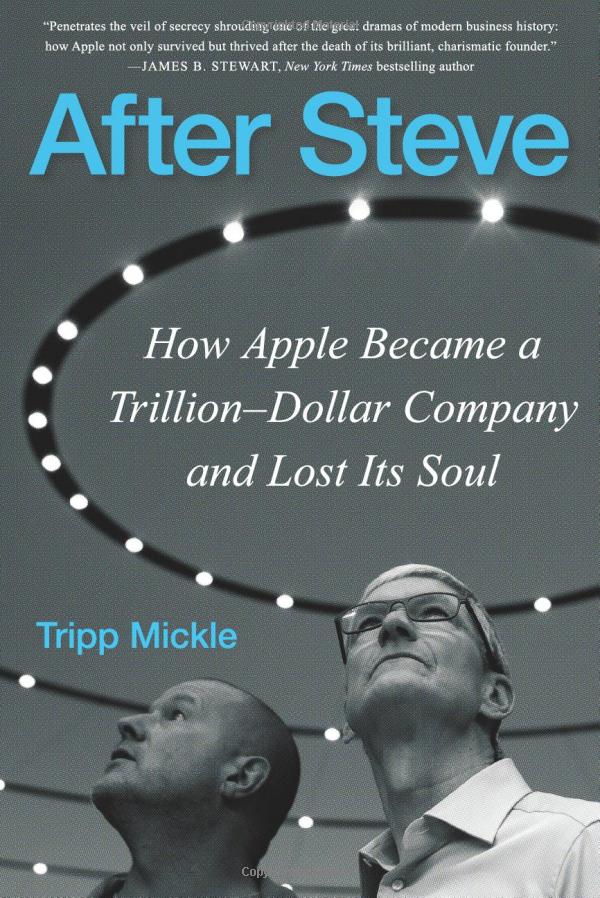
After Steve: How Apple Became A Trillion-dollar Company And Lost Its Soul
From the New York Times’ Tripp Mickle, the dramatic, untold story inside Apple after the passing of Steve Jobs by following his top lieutenants—Jony Ive, the Chief Design Officer, and Tim Cook, the COO-turned-CEO—and how the fading of the former and the rise of the latter led to Apple losing its soul.
Steve Jobs called Jony Ive his “spiritual partner at Apple.” The London-born genius was the second-most powerful person at Apple and the creative force who most embodies Jobs’s spirit, the man who designed the products adopted by hundreds of millions the world over: the iPod, iPad, MacBook Air, the iMac G3, and the iPhone. In the wake of his close collaborator’s death, the chief designer wrestled with grief and initially threw himself into his work designing the new Apple headquarters and the Watch before losing his motivation in a company increasingly devoted more to margins than to inspiration.
In many ways, Cook was Ive’s opposite. The product of a small Alabama town, he had risen through the ranks from the supply side of the company. His gift was not the creation of new products. Instead, he had invented countless ways to maximize a margin, squeezing some suppliers, persuading others to build factories the size of cities to churn out more units. He considered inventory evil. He knew how to make subordinates sweat with withering questions.
Jobs selected Cook as his successor, and Cook oversaw a period of tremendous revenue growth that has lifted Apple’s valuation to $2 trillion. He built a commanding business in China and rapidly distinguished himself as a master politician who could forge global alliances and send the world’s stock market into freefall with a single sentence.
Author Tripp Mickle spoke with more than 200 current and former Apple executives, as well as figures key to this period of Apple’s history, including Trump administration officials and fashion luminaries such as Anna Wintour while writing After Steve. His research shows the company’s success came at a cost. Apple lost its innovative spirit and has not designed a new category of device in years. Ive’s departure in 2019 marked a culmination in Apple’s shift from a company of innovation to one of operational excellence, and the price is a company that has lost its soul.
Review After Steve: How Apple Became A Trillion-dollar Company And Lost Its Soul
If you’re looking to understand the transformation of Apple in the years following Steve Jobs, *After Steve: How Apple Became A Trillion-dollar Company And Lost Its Soul* by Tripp Mickle is essential reading. This meticulously researched book delves into the intricate dynamics between Tim Cook and Jony Ive, shedding light on how their contrasting leadership styles contributed to Apple’s staggering financial success while inadvertently compromising its innovative essence. You will find a narrative that is not only compelling but also deeply introspective—raising important questions about what it means for a company to remain both economically viable and true to its creative spirit. Mickle’s exploration of how Cook shifted the focus from design to operational efficiency paints a vivid picture of Apple’s journey into corporate triumph and its consequent loss of soul. You might wonder, how did a company that once thrived on innovation become so data-driven and profit-oriented? This book offers more than just facts; it provides a nuanced understanding of the human elements behind those decisions and their long-term implications. When you read this book, you’ll not only engage with the historical narrative but also reflect on the essence of innovation in today’s corporate world. Like a gripping business drama, it pulls you in and informs you at every turn. It’s a cautionary tale for any aspiring entrepreneur or tech enthusiast about the delicate balance between profitability and creativity, underscoring the vital question: can a company thrive without its soul? Ultimately, this book is a must-read for anyone who appreciates the intersection of business, culture, and innovation.
In “After Steve: How Apple Became A Trillion-dollar Company And Lost Its Soul,” Tripp Mickle offers readers a profound look into the transformative years at Apple following Steve Jobs’s passing. This book is essential for anyone seeking to understand how a brand synonymous with innovation pivoted into a profit-driven machine. You will find yourself captivated by the juxtaposition of Jony Ive’s creative genius against the operational prowess of Tim Cook. As you delve deeper, you may feel a mix of admiration for Apple’s financial achievements and a lingering sadness for the creative spirit that seems to have dimmed over time. The narrative is compelling, revealing how a once passionately innovative company traded inspiration for margins. Mickle’s extensive interviews with over 200 insiders enrich the story, providing a candid view into the corporate dynamics that shaped the Apple we know today. Like many true stories, it evokes a sense of nostalgia for what has been lost in the pursuit of unprecedented revenue. This book is not just about Apple; it reflects a broader commentary on the cost of success and the sacrifices made along the way. It serves as both a cautionary tale and a celebration of a company that revolutionized technology. Whether you are a devoted Apple fan or a casual observer, you will find this evaluation of the brand’s evolution captivating and thought-provoking. Ultimately, Mickle’s work challenges you to think about whether the price of greatness is worth the loss of a company’s soul.
Lessons from After Steve: How Apple Became A Trillion-dollar Company And Lost Its Soul
Reading “After Steve: How Apple Became A Trillion-dollar Company And Lost Its Soul” by Tripp Mickle offers a profound insight into the drastic transition Apple underwent post-Steve Jobs. You see, there’s a dichotomy between innovation and operational excellence. Like a well-oiled machine, Tim Cook enhanced Apple’s profitability, driving its valuation to an astounding $2 trillion. However, this remarkable growth came at a significant cost—Apple began to lose its innovative spirit. You might find it intriguing how creativity can diminish under the pressure of profit margins and stock market fluctuations. Mickle’s narrative reminds you that true success is more than just numbers; it’s about passion and inspiration fueling groundbreaking ideas. Not like countless corporations that prioritize profits over people, Apple’s story highlights the essential balance between maintaining operational excellence and nurturing a culture of innovation. The departure of Jony Ive in 2019 signifies more than just the loss of a talented designer; it represents a pivotal moment when Apple shifted from being a powerhouse of creativity to a corporate giant focused on efficiency. This raises critical questions about your own values and what you prioritize in your life’s work. Would you choose short-term gains or the lasting impact of innovation? Embracing the initial spirit of Apple, you learn that fostering creativity is crucial in any endeavor. Whether in business or personal projects, nurturing an environment that encourages ideas and risks ultimately leads to genuine progress. In this relentless pursuit of success, ensure that you keep the soul of your journey intact. The lessons from this compelling narrative of Apple serve as a reminder that while you can achieve greatness, the essence of your journey should never be neglected. Remember, it’s not just about the destination but the trail of inspiration and innovation you leave behind.
Reading After Steve: How Apple Became A Trillion-dollar Company And Lost Its Soul by Tripp Mickle offers significant insights into the complex dynamics within Apple, especially following the loss of Steve Jobs. You may find it fascinating that while innovation once fueled Apple’s ascension, the shift towards operational excellence under Tim Cook has allowed for unprecedented financial growth yet has potentially stripped away its original creative essence. The transformation of Jony Ive from a spiritual partner to a disenchanted designer illustrates a crucial lesson: balance is key. In your endeavors, like Apple, you may achieve financial success but at the risk of losing the soul of what truly makes you unique and inspired. This emphasizes that focus on profit margins can overshadow what initially attracted customers and creative minds.
Additionally, Mickle’s detailed consultation with over 200 figures associated with Apple highlights the importance of nurturing a collaborative culture while also ensuring that creativity does not get stifled by operational demands. As you navigate your professional landscape, consider how to maintain this creative spark while maximizing efficiency. The narrative serves as a reminder that true innovation stems from a visionary environment, not just out of profit-driven motives.
Ultimately, it’s not just about becoming a trillion-dollar company; it’s about sustaining the vision and values that propelled you to that point in the first place. Aim to hold on to your identity. Never allow operational success to eclipse your creative dreams. Embrace this dualistic approach to growth: pursue excellence, but never at the expense of losing your soul. This lesson resonates across industries, prompting you to evaluate how your own choices reflect what you genuinely stand for.